
What Are Hydraulic Valves?
Hydraulic valves are core control components in hydraulic systems. They regulate pressure, flow rate, and flow direction, ensuring that hydraulic actuators such as cylinders and motors operate safely and accurately.
They are widely used in construction machinery, industrial equipment, aerospace systems, and automated manufacturing, playing a critical role in overall system performance.
Main Functions of Hydraulic Valves
Hydraulic valves perform three fundamental control functions:
-
Pressure control – maintaining safe operating pressure
-
Flow control – regulating actuator speed
-
Directional control – determining movement direction
Based on these functions, hydraulic valves are classified into three main types.
Types of Hydraulic Valves
1. Directional Control Valves
Directional control valves manage the path of hydraulic fluid.
-
Check valves allow fluid flow in one direction only and prevent backflow.
-
Directional control valves (DCVs) switch flow direction by spool movement. Common designs include 2-position and 3-position valves used to control actuator motion and stopping.
2. Pressure Control Valves
Pressure control valves protect the system and regulate pressure levels.
-
Relief valves limit maximum system pressure to prevent overload.
-
Pressure reducing valves supply lower pressure to specific branches.
-
Sequence valves control actuator operation order based on pressure signals.
3. Flow Control Valves
Flow control valves regulate fluid flow rate and actuator speed.
-
Throttle valves adjust flow by changing orifice size.
-
Pressure-compensated flow control valves maintain stable flow under varying load conditions and are used in precision applications.
Basic Structure and Working Principle
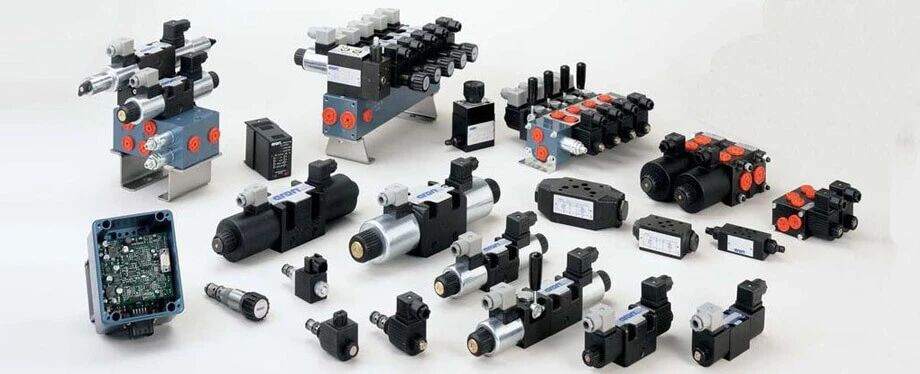
A typical hydraulic valve consists of:
-
Valve spool – controls opening and closing of flow paths
-
Valve body – provides internal fluid passages
-
Actuation mechanism – manual, solenoid, hydraulic, or proportional control
Valve operation is based on force balance and fluid dynamics, enabling pressure regulation, flow adjustment, and directional switching.
Key Factors for Hydraulic Valve Selection
1. Pressure Rating
The valve’s rated pressure should exceed the system’s maximum working pressure by 10–20% to ensure reliability.
2. Flow Capacity
Valve size must match the required flow rate. The pressure drop across the valve should remain within acceptable limits to maintain system efficiency.
3. Fluid and Environmental Conditions
-
Fluid viscosity affects valve response and sealing performance.
-
Contaminated environments require valves with higher contamination tolerance.
4. Control Method and Installation
Select control methods (manual, solenoid, proportional) and mounting types (inline, subplate, cartridge) based on system design and operating conditions.
Typical Applications
Hydraulic valves are commonly used in:
-
Construction and earth-moving equipment
-
Industrial machinery and presses
-
Automated production systems
-
Aerospace and specialized hydraulic systems
Conclusion
Hydraulic valves are essential for controlling pressure, flow, and direction in hydraulic systems. Understanding valve types, working principles, and selection criteria helps improve system efficiency and ensures stable, reliable operation.
Choosing the right hydraulic valve is a key step in designing a high-performance hydraulic system.