
Choosing the right hydraulic pump is critical to the performance, efficiency, and reliability of any hydraulic system. An incorrectly sized or unsuitable pump can lead to energy loss, frequent maintenance issues, and even system failure. This guide will help you understand the key factors, pump types, parameter selection, and practical considerations necessary to select the best hydraulic pump for your system.
1. Why Choosing the Right Hydraulic Pump Matters
Hydraulic pumps are the heart of any hydraulic system. They convert mechanical energy into hydraulic energy to drive actuators like cylinders and motors. Selecting the correct pump ensures:
-
System efficiency – proper flow and pressure reduce energy consumption.
-
Reliability and longevity – matching pump capabilities to system requirements prevents premature wear.
-
Safety – the correct pump prevents system overpressure, cavitation, or unexpected failure.
Without a suitable pump, even a well-designed system can underperform or fail.
2. Key Criteria for Selecting a Hydraulic Pump
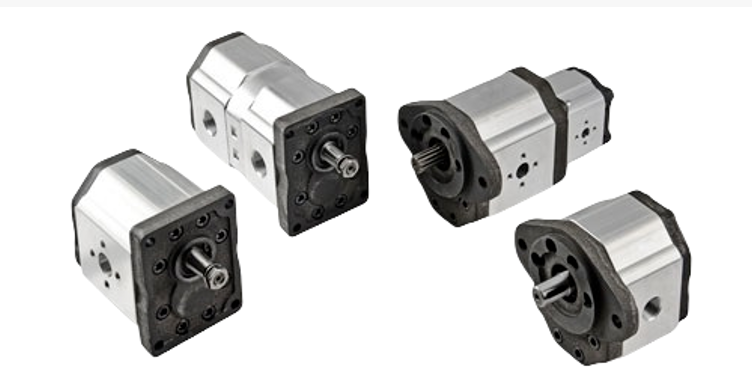
When selecting a hydraulic pump, it is important to consider the system’s specific needs. The following factors are critical:
2.1 Variable vs Fixed Displacement
-
Variable displacement pumps: such as axial or radial piston pumps, and single-acting vane pumps, are suitable when the system requires adjustable flow or pressure.
-
Fixed displacement pumps: gear pumps or double-acting vane pumps are sufficient for systems with constant flow requirements.
2.2 Operating Pressure
-
The pump’s maximum working pressure must match the system’s requirements:
-
Piston pumps: high-pressure systems (up to 31.5 MPa)
-
Vane pumps: medium-pressure systems (typically 6.3 MPa, up to 16 MPa)
-
Gear pumps: low-pressure systems (up to 21 MPa)
-
2.3 Working Environment and Contamination Resistance
-
Gear pumps have strong resistance to contaminated oil, suitable for harsher environments.
-
Vane pumps offer moderate contamination resistance.
-
Piston pumps require clean oil and are suitable for high-purity hydraulic systems.
2.4 Noise Requirements
-
Noise-sensitive applications should use pumps with smoother flow and minimal pulsation, such as internal gear pumps, double-acting vane pumps, or screw pumps.
2.5 Efficiency
-
Pump efficiency affects system energy consumption:
-
Axial piston pumps – highest efficiency
-
Vane pumps – moderate efficiency
-
Gear pumps – lower efficiency
-
3. Understand Your System Requirements
Before choosing a pump, define the system parameters:
-
Flow Rate – The pump must supply enough hydraulic oil to achieve the desired actuator speed. For multiple cylinders operating simultaneously, total flow demand equals the sum of individual cylinder requirements, adjusted for leakage (usually a factor of 1.1–1.3).
-
Operating Pressure – The pump’s working pressure should be slightly higher than the maximum pressure required by the system, typically 25% above calculated system pressure.
-
Fluid Type and Viscosity – Different pumps require specific hydraulic fluids; oil selection affects wear and efficiency.
-
Temperature and Environment – Extreme temperatures and environmental conditions affect performance.
-
Duty Cycle – Continuous vs intermittent operation affects pump choice.
Properly defining these parameters is the foundation for selecting the correct pump type and size.
4. Know the Main Types of Hydraulic Pumps
Gear Pumps
-
Pros: Simple, cost-effective, durable, strong contamination resistance
-
Cons: Moderate efficiency, limited pressure range
-
Applications: Low-pressure systems, basic hydraulic circuits
Vane Pumps
-
Pros: Smooth flow, low noise, moderate pressure capacity
-
Cons: Moderate contamination resistance
-
Applications: Medium-pressure systems requiring stable flow
Piston Pumps
-
Pros: High efficiency, high pressure, suitable for heavy-duty and precise systems
-
Cons: Sensitive to oil contamination, higher cost
-
Applications: High-pressure systems, continuous operation, or precision control
Variable vs fixed displacement: choose variable displacement pumps if flow or pressure regulation is needed; otherwise, fixed displacement pumps are suitable.
5. Matching Performance Metrics to Your System
Assess the pump’s key metrics to ensure system compatibility:
-
Pressure Rating – Should meet or exceed system peak and continuous pressures.
-
Flow Capacity – Must match total system flow demand, considering leakage.
-
Efficiency – Higher mechanical and volumetric efficiency reduces energy consumption and heat.
-
Displacement – Aligns pump output with required flow.
-
Noise & Vibration – Important for sensitive environments.
6. Extra Design and Practical Considerations
-
Space and Mounting – Confirm pump fits within system layout.
-
Fluid Contamination & Filtration – Proper filtration extends pump life.
-
Temperature & Environment – Material and seal compatibility.
-
Fixed vs Variable Displacement – Fixed displacement for simplicity; variable for energy efficiency.
7. Cost, Maintenance, and Long-Term Value
-
Initial Purchase Cost – Gear pumps are economical; piston pumps are more expensive upfront.
-
Energy Efficiency – High-efficiency pumps may save energy in the long term.
-
Maintenance & Spare Parts – Easy-to-maintain pumps reduce downtime.
-
Total Cost of Ownership – Consider purchase, energy, maintenance, and expected lifespan.
8. Conclusion
Selecting the right hydraulic pump requires careful consideration of system requirements, pump type, performance metrics, efficiency, and maintenance. Combining these factors ensures reliable operation, optimal energy use, and long pump life. Proper pump selection is a critical step for achieving a safe, efficient, and durable hydraulic system.