
In hydraulic systems, hydraulic cylinders are key actuators that convert hydraulic energy into mechanical energy. Their performance directly affects system efficiency, stability, and operational safety.
Internal leakage is one of the most common hydraulic cylinder faults. It can cause pressure loss, slow or unstable movement, reduced system efficiency, and in severe cases, safety hazards.
Therefore, accurate testing of internal leakage in hydraulic cylinders is essential. This article introduces practical and reliable methods for detecting internal leakage to help technicians identify problems early and take effective corrective actions.
1. What Is Internal Leakage and Why It Matters :
Internal leakage in a hydraulic cylinder refers to the phenomenon where hydraulic oil bypasses the piston seals from the high-pressure chamber to the low-pressure chamber. Unlike external leakage, internal leakage is usually not directly observable, but it can have significant effects on the hydraulic system:
-
Pressure drop and sluggish cylinder operation
-
Reduced system efficiency and increased energy consumption
-
Unstable cylinder movement, potentially causing mechanical damage
-
In high-load or critical equipment, severe internal leakage may even lead to safety incidents
Therefore, accurately identifying internal leakage and taking timely corrective measures is a crucial step in ensuring the stable operation of hydraulic systems.
2. Causes of Internal Leakage in Hydraulic Cylinders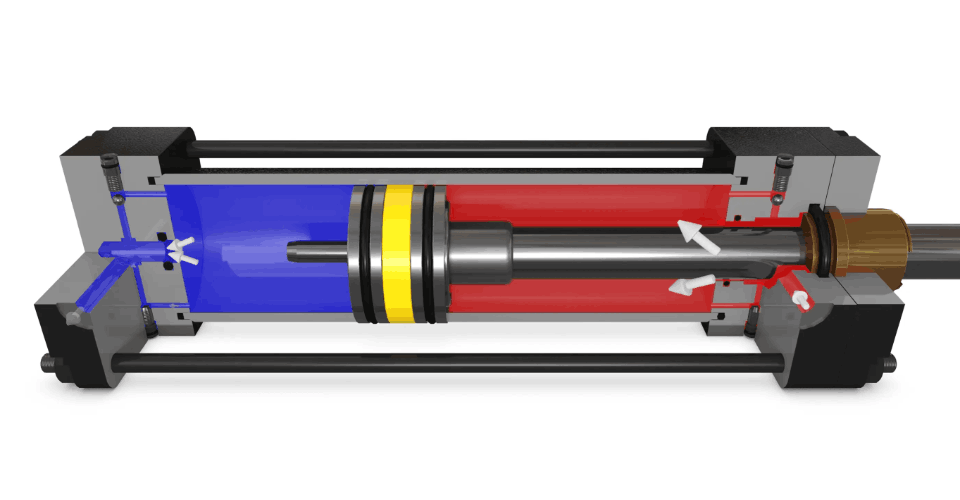
3. Common Signs of Internal Leakage:
Although internal leakage cannot be directly observed, it can be identified through the following symptoms:
-
Abnormal performance: Sluggish hydraulic cylinder movement, incomplete extension or retraction, and uneven motion
-
Abnormal noise: Unusual hissing sounds or pulsating noises during operation
-
System pressure drop: A noticeable decrease in pressure gauge readings under load conditions
-
Abnormal temperature rise: Localized temperature increases may indicate hydraulic oil leaking past seals
These signs can serve as preliminary indicators of internal leakage and help guide technicians in selecting appropriate testing methods.
5. Methods for Testing Internal Leakage in Hydraulic Cylinders
5.1 Static Test Method
Test Procedure:
- Connect one end of the hydraulic cylinder’s inlet port to the hydraulic pump output line, and connect the other end’s outlet port to the oil tank through a pipeline. Install a flow meter at the outlet port. Close all other unrelated oil circuits.
- Start the hydraulic pump and gradually adjust the pressure so that the pressure inside the hydraulic cylinder rises to 125% of the rated working pressure. Maintain this pressure for a certain period (generally 5–10 minutes). During the pressure-holding process, observe the pressure gauge reading. If the pressure drops too quickly, it indicates a possible significant internal leakage.
- Use a stopwatch to record the volume of leaked oil passing through the flow meter over a certain period (e.g., 30 or 60 seconds), and calculate the leakage rate using the formula: Q=V/t
-
Q = leakage rate (L/min)
-
V = volume of leaked oil recorded during the time period (L)
-
t = recorded time (min)
Result Evaluation: Compare the calculated leakage rate with the allowable leakage specified by the hydraulic cylinder manufacturer. If the actual leakage is less than or equal to the allowable value, the internal leakage of the cylinder is considered within the normal range. If the actual leakage exceeds the allowable value, it indicates an internal leakage fault in the hydraulic cylinder, and further inspection and maintenance are required.
5.2 Dynamic Test Method
Test Procedure:
-
Connect the hydraulic cylinder to the hydraulic system in its normal operating configuration, ensuring that all components are correctly installed and the oil circuits are unobstructed.
-
Start the hydraulic system and allow the hydraulic cylinder to perform reciprocating motion within the specified stroke range. The motion speed and load should approximate actual working conditions.
-
During the movement of the hydraulic cylinder, observe the pressure fluctuations on the system’s pressure gauge. If there is a significant and unstable pressure drop under no-load or light-load conditions, or if excessive pressure shocks occur during directional changes, this may indicate an internal leakage problem.
-
For more accurate detection of internal leakage, pressure sensors can be installed at the inlet and outlet ports of the hydraulic cylinder to monitor the pressures in both chambers in real time. By analyzing the pressure difference curves over time, the degree and location of internal leakage can be determined.
Result Evaluation:
A comprehensive judgment is made based on the pressure fluctuations and the pressure difference curves. If the pressure fluctuations exceed the normal range and the pressure difference gradually increases during movement, it indicates a severe internal leakage. If the pressure fluctuations are minor and stable, and the pressure difference remains largely unchanged, the internal leakage is minimal or absent.
5.3 Pressure Drop Test Method
Test Procedure:
-
Close both the inlet and outlet ports of the hydraulic cylinder, placing the cylinder in a sealed state.
-
Fill one chamber of the hydraulic cylinder with hydraulic oil at a certain pressure (generally 80%–90% of the rated working pressure) and record the initial pressure value P1.
-
After maintaining this state for a period of time (e.g., 10 minutes), read the pressure value P2 of the same chamber again.
Result Evaluation:
The internal leakage is determined based on the pressure drop value:
ΔP=P1−P2
If ΔP exceeds the allowable pressure drop (provided by the hydraulic cylinder manufacturer or determined according to industry standards), it indicates the presence of internal leakage. If ΔP is within the allowable range, the internal leakage is considered normal.
6. Maintenance Recommendations:
-
Regularly inspect the hydraulic cylinder seals and promptly replace any worn or aged seals
-
Maintain hydraulic oil cleanliness and replace the oil at regular intervals
-
Avoid operating the hydraulic cylinder under overload conditions
-
Record test data and establish maintenance records to track leakage trends over time
7. Conclusion: