
Hydraulic hoses are critical components in hydraulic systems, used for hydraulic transmission. Based on structure and performance, commonly used hydraulic hoses can be classified into wire-braided and wire-wound types, each having different pressure resistance, flexibility, and other characteristics to suit various working environments and pressure conditions. In addition, the quality and reliability of hydraulic hoses are closely related not only to their internal structural design but also to the standards followed during the manufacturing process. These standards strictly regulate the materials, dimensions, pressure resistance, and other properties of hydraulic hoses, ensuring they work safely and stably in different hydraulic systems.
1. Structure of Hydraulic Hoses
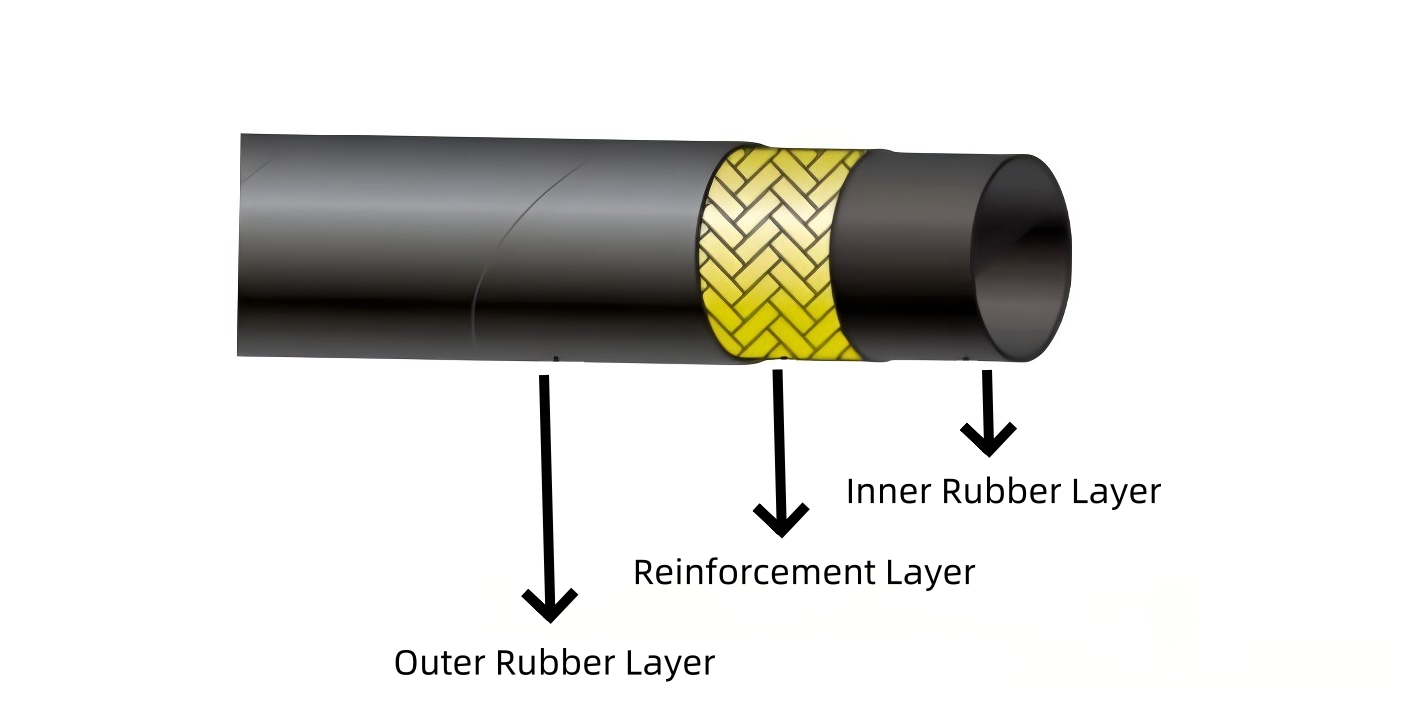
A hydraulic hose typically consists of three parts: the inner rubber layer, the reinforcement layer, and the outer rubber layer. Each layer plays a vital role in the performance of the hydraulic hose.
(1) Inner Rubber Layer
The inner rubber layer is the core part of the hydraulic hose, primarily responsible for transporting hydraulic oil or other fluids. It needs to have excellent oil resistance, corrosion resistance, and high-temperature resistance to prevent the fluid medium from corroding the steel reinforcement layer inside the hose. The inner layer is generally made from specialized rubber materials to ensure fluid sealing and prevent leakage.
(2) Reinforcement Layer
The reinforcement layer is the skeleton of the hydraulic hose, responsible for bearing the high pressure in the hydraulic system. It is typically made from steel wire, polyester fibers, or other high-strength materials that are braided or wound. The main function of the reinforcement layer is to provide sufficient strength and flexibility, ensuring that the hose remains stable under high-pressure and high-stress conditions. Based on the design of the reinforcement layer, hydraulic hoses can be classified into wire-braided and wire-wound types, each with different pressure resistance and suitable pressure ranges.
(3) Outer Rubber Layer
The outer rubber layer serves to protect the hose from external damage, such as wear, UV radiation, chemicals, or mechanical impact. It is typically made from abrasion-resistant, UV-resistant, and high-temperature-resistant rubber materials. The outer layer not only extends the hose's lifespan but also ensures its stability in harsh environments.
2. Classification of Hydraulic Hoses
(1) Classification by Structure
Hydraulic hoses can be classified into wire-braided and wire-wound types based on the reinforcement structure. These hoses are used in medium-to-low pressure and high-pressure hydraulic systems, respectively.
Wire-Braided Hydraulic Hose: This type of hose has one or more layers of steel wire braid as the reinforcement layer. It offers good flexibility and is suitable for medium-to-low-pressure environments. Wire-braided hoses are widely used in hydraulic systems with lower pressure requirements, providing excellent pressure resistance and tensile strength.
Wire-Wound Hydraulic Hose: The reinforcement layer of a wire-wound hydraulic hose is made of multiple layers of steel wire wound in a spiral fashion. This structure provides higher pressure resistance and impact resistance, making it ideal for high-pressure hydraulic systems. Due to its strength, wire-wound hoses show strong stability when exposed to external mechanical stresses and high-pressure conditions.
(2) Classification by Reinforcement Layer Count
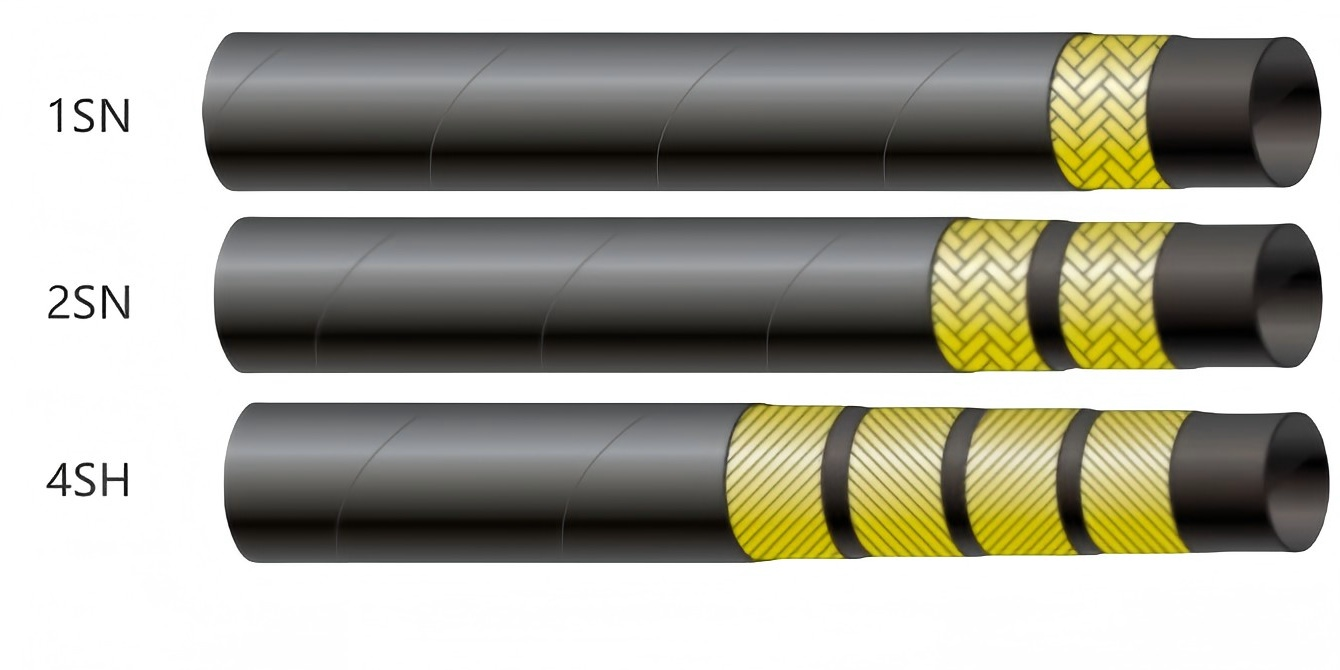
Hydraulic hoses can also be classified by the number of reinforcement layers, which determines their strength and ability to handle different pressure environments. For example:
1SN: Single-layer reinforced hose, suitable for low-pressure hydraulic systems.
2SN: Double-layer reinforced hose, able to withstand medium pressures, widely used in medium-sized machinery and industrial equipment.
4SP and 4SH: Four-layer reinforced hoses, designed for high-pressure hydraulic systems, commonly found in heavy machinery and high-pressure hydraulic equipment.
We select the appropriate hydraulic hose based on the number of reinforcement layers to ensure system stability and safety.
(3) Standards for Hydraulic Hoses
Hydraulic hose standards vary according to the regulations set by different countries and international organizations. These standards mainly include:
National Standards (GB)
International Standards (ISO)
European Standards (EN)
American Standards (SAE)
These standards regulate the materials, dimensions, pressure resistance, and testing methods for hydraulic hoses, ensuring their quality, safety, and compatibility.