
Hydraulic hoses are essential components in hydraulic systems. They are used to transport pressurized hydraulic fluid between system components such as pumps, valves, cylinders, and motors. Without reliable hydraulic hoses, a hydraulic system cannot operate safely or efficiently.
Understanding what a hydraulic hose is and how it works helps engineers and operators make better decisions in system design, installation, and maintenance.
What Is a Hydraulic Hose?
A hydraulic hose is a flexible high-pressure hose designed to carry hydraulic fluid within a hydraulic system. Unlike rigid pipes, hydraulic hoses allow movement, vibration absorption, and flexible routing in compact or dynamic applications.
Hydraulic hoses are widely used in construction machinery, agricultural equipment, industrial machines, and mobile hydraulic systems where flexibility and durability are required.
Basic Structure of a Hydraulic Hose
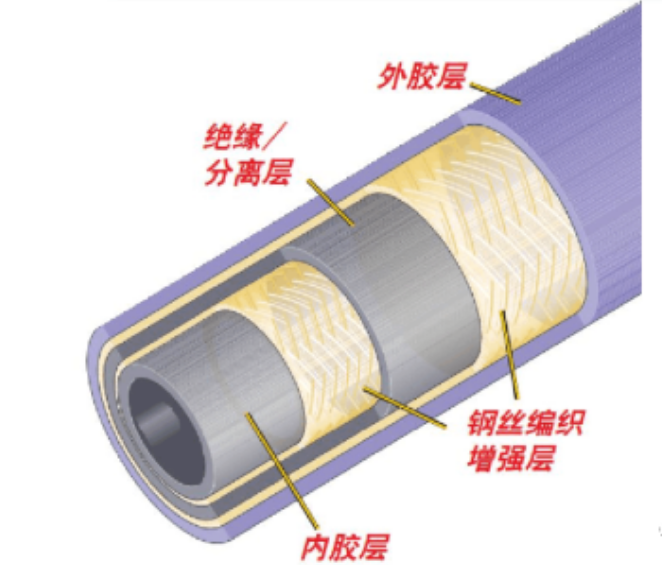
A hydraulic hose typically consists of three main layers:
1. Inner Tube
The inner tube is in direct contact with the hydraulic fluid. It is usually made from synthetic rubber or thermoplastic material that is compatible with hydraulic oil and resistant to pressure and chemical degradation.
2. Reinforcement Layer
The reinforcement layer provides strength and pressure resistance. It is commonly made of braided or spiraled steel wire, textile fibers, or a combination of both. This layer allows the hose to withstand high operating pressures without expanding or bursting.
3. Outer Cover
The outer cover protects the hose from external damage such as abrasion, weather exposure, oil spills, and mechanical impact. It also helps extend the service life of the hose in harsh working environments.
How Does a Hydraulic Hose Work?
A hydraulic hose works by transmitting pressurized hydraulic fluid from one component to another. When the hydraulic pump generates pressure, the fluid flows through the hose, carrying energy to actuators such as hydraulic cylinders or motors.
The hose must maintain a secure seal while withstanding:
-
High internal pressure
-
Pressure pulsations
-
Temperature changes
-
Continuous movement or vibration
The reinforcement layer prevents excessive expansion, while the inner tube ensures smooth fluid flow and minimal leakage.
Why Hydraulic Hoses Are Critical to System Performance
Hydraulic hoses play a key role in system safety and efficiency. A poorly selected or damaged hose can lead to:
-
Pressure loss
-
Reduced system efficiency
-
Fluid leakage
-
Unexpected system failure
Proper hose selection ensures stable fluid transmission and reliable system operation under varying working conditions.
Typical Applications of Hydraulic Hoses
Hydraulic hoses are commonly used in:
-
Construction and earth-moving equipment
-
Agricultural machinery
-
Industrial hydraulic systems
-
Mining and offshore equipment
-
Mobile hydraulic applications
Each application may require different hose specifications depending on pressure, temperature, and environmental factors.
Conclusion
Hydraulic hoses are vital components that connect and support all parts of a hydraulic system. By understanding their structure and working principles, users can better select hoses that meet system requirements and ensure long-term reliability and safety.