Step 1: Design and Engineering:
The manufacturing process of hydraulic cylinders starts with meticulous design and engineering. Engineers analyze the application requirements and create detailed 3D models and technical drawings using computer-aided design (CAD) software.
Step 2: Material Selection:
High-quality materials are crucial for hydraulic cylinder manufacturing. Steel or stainless steel is commonly chosen for the cylinder barrel and piston rod, considering factors like load capacity, operating environment, and corrosion resistance.
Step 3: Cylinder Barrel Production:
The cylinder barrel is manufactured using seamless steel tubes or precision-rolled steel. Precision machining processes ensure a smooth internal bore and precise dimensions. Honing or grinding may be used for achieving the desired surface finish.
Step 4: Piston Rod Manufacturing:
Piston rods are made from high-strength steel bars, cut to the required length and machined through processes such as turning, grinding, and polishing. These processes ensure dimensional accuracy, surface finish, and necessary hardness.
Step 5: Component Fabrication:
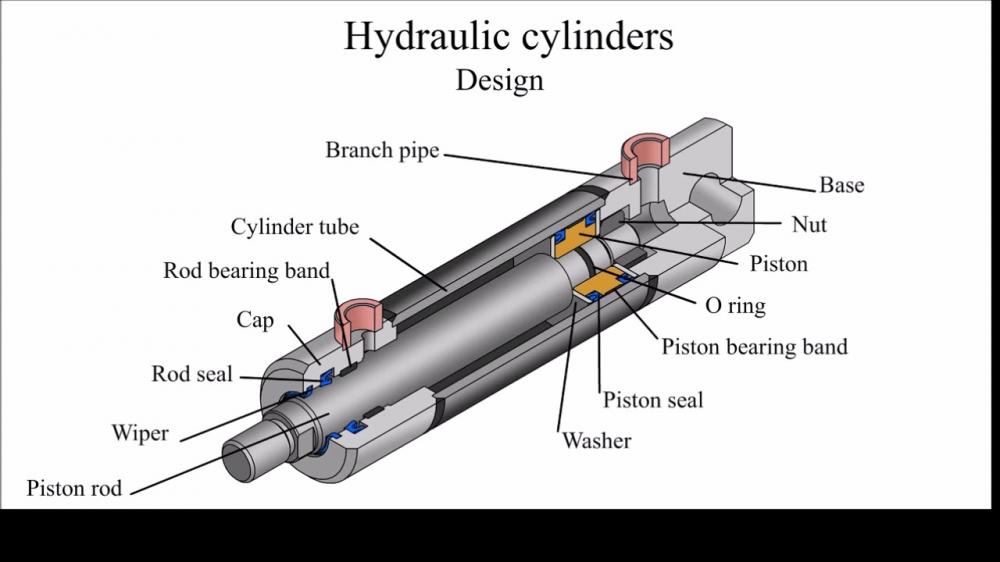
Various components like end caps, pistons, seals, and bearings are fabricated separately. End caps are typically made from steel, while pistons may use aluminum or cast iron. Seals made from elastomeric or polymeric materials provide reliable sealing under hydraulic pressures.
Step 6: Assembly and Testing:
Skilled technicians carefully assemble the cylinder, ensuring proper alignment and sealing. Lubrication is applied to moving parts, and seals are installed. The assembled cylinder undergoes rigorous testing to verify performance, including pressure, leakage, and functional tests.
Step 7: Surface Treatment and Coating:
To enhance durability and corrosion resistance, hydraulic cylinders may undergo surface treatments and coatings. Electroplating, galvanizing, or protective coatings are applied based on specific requirements and operating environment.
Step 8: Quality Control and Inspection:
Stringent quality control measures ensure that hydraulic cylinders meet industry standards and customer specifications. Inspections are carried out at various stages, including material inspection, dimensional checks, surface finish evaluation, and performance testing.
Conclusion:
The manufacturing process of hydraulic cylinders involves meticulous design, precise machining, and assembly techniques to create robust and reliable components. Understanding the process helps us appreciate the craftsmanship and engineering behind these essential components.
If you'd like to learn more about hydraulic products, click on Hydraulic Hose and Hydraulic Fittings.