Flow Control Valves:
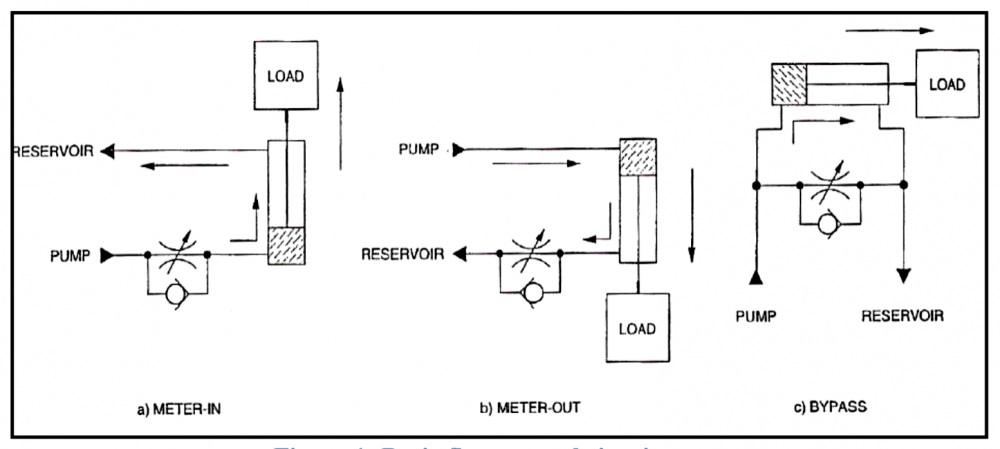
Flow control valves are widely used to regulate the speed of hydraulic cylinders. They control the rate of fluid flow entering or exiting the cylinder, thereby controlling the cylinder's speed. Common types of flow control valves include:
Throttle Valves: These valves restrict the fluid flow by creating a narrow passage, reducing the flow rate and thus controlling the cylinder speed.
Needle Valves: Similar to throttle valves, needle valves create a narrow opening to control fluid flow and cylinder speed.
Adjustable Orifice Valves: These valves allow adjustment of the orifice size to regulate fluid flow and control the speed of the hydraulic cylinder.
Pressure Control Valves:
Pressure control valves can indirectly affect the speed of hydraulic cylinders by regulating the system pressure. By controlling the pressure, the force applied to the cylinder can be adjusted, which in turn affects the speed of the cylinder's movement. Common pressure control valves used for speed control include:
Pressure Relief Valves: These valves limit the maximum system pressure and indirectly influence the cylinder speed by controlling the applied force.
Pressure Reducing Valves: These valves reduce the system pressure and, consequently, the force exerted on the cylinder, allowing for speed control.
Proportional Control:
Proportional control techniques offer more precise speed control by utilizing electronic or electro-hydraulic systems. These systems adjust the flow or pressure using feedback signals, allowing for real-time adjustment of the cylinder speed. Proportional control valves and electronic control systems enable finer control over the cylinder's speed, making them ideal for applications that require high precision.
Load-Sensing Systems:
Load-sensing systems are advanced hydraulic control systems that monitor the load on the cylinder and adjust the flow or pressure accordingly. By sensing the load, these systems can automatically adapt the cylinder speed to maintain optimal performance and stability. Load-sensing systems are commonly used in heavy machinery and equipment where load variations are frequent.
System Design Considerations:
Proper hydraulic system design can also contribute to speed control. Factors such as cylinder size, pump capacity, and piping layout can impact the speed of hydraulic cylinders. Ensuring that the system components are appropriately sized and matched to the application requirements is essential for achieving desired speed control.
Conclusion:
Controlling the speed of hydraulic cylinders is vital for achieving precise and safe operation in hydraulic systems. By utilizing flow control valves, pressure control valves, proportional control techniques, and load-sensing systems, operators can effectively regulate the speed of hydraulic cylinders. Additionally, considering system design factors can further optimize speed control. With proper speed control, hydraulic systems can operate efficiently, maintain load stability, and enhance overall safety.
If you would like to learn more about our products, please click on Hydraulic Hose, Hydraulic Fittings.