Basic Components:
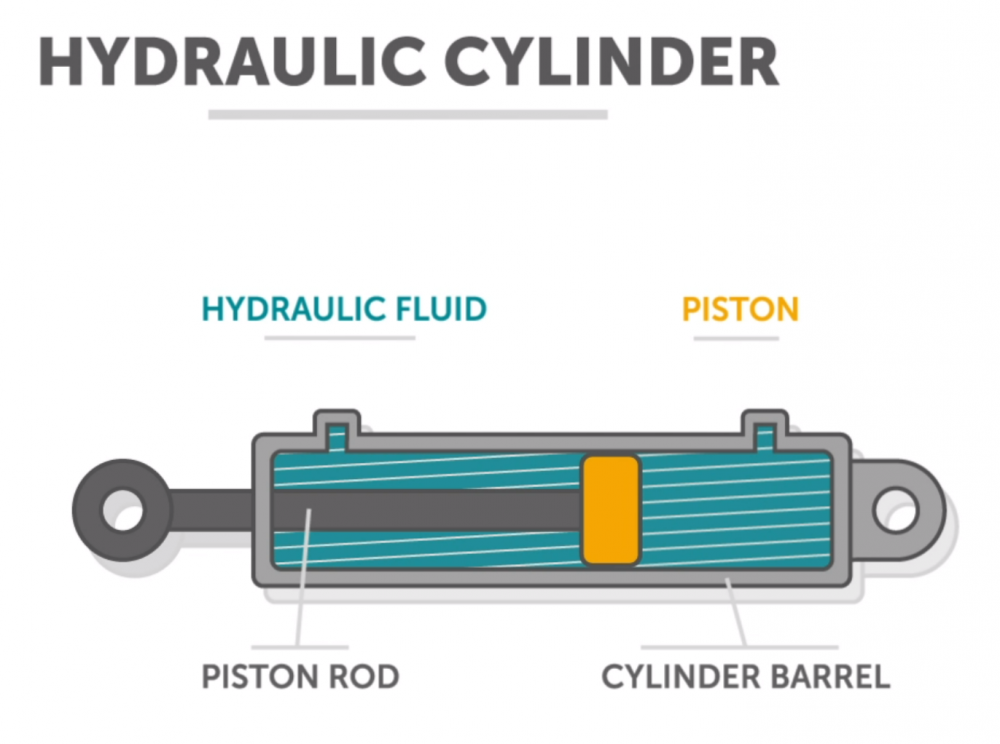
A hydraulic cylinder consists of several key components:
Cylinder Barrel: The cylindrical housing containing the piston and other internal components.
Piston: The movable component dividing the cylinder into two chambers.
Piston Rod: The rod attached to the piston, extending through the cylinder's end.
Seals: Rings or seals fitted around the piston and piston rod to prevent leakage.
Working Principle:
The working principle of a hydraulic cylinder involves the transfer of force through hydraulic fluid. Here's how it works:
Step 1: Fluid Intake: Pressurized hydraulic fluid enters one of the cylinder chambers, known as the "blind end."
Step 2: Piston Movement: The pressurized fluid pushes against the piston, causing it to move towards the opposite end of the cylinder.
Step 3: Force Generation: As the piston moves, it exerts force on the load attached to the piston rod, enabling tasks such as lifting, pushing, or pulling.
Step 4: Fluid Return: The displaced hydraulic fluid from the blind end flows back to the hydraulic reservoir through a return line, allowing the piston to complete its stroke.
Double-Acting vs. Single-Acting Cylinders:
Double-Acting Cylinders: These cylinders have a piston on both ends, allowing bi-directional movement. Pressurized fluid is alternately applied to each side of the piston, enabling precise control of the piston's motion.
Single-Acting Cylinders: These cylinders have a piston on one end, while the other end is open to the atmosphere or has a spring return mechanism. They provide force in only one direction, with the return stroke accomplished by external forces or spring tension.
Applications:
Hydraulic cylinders find applications in various industries, including construction, manufacturing, agriculture, and transportation. Common uses include equipment lifting, material handling, excavators, presses, and steering systems in vehicles.
Conclusion:
Understanding the working principles of hydraulic cylinders is essential for individuals working with hydraulic systems. By comprehending the basic components, working principles, and types of hydraulic cylinders, individuals can better appreciate their functionality and effectively apply them in various applications.
Discover extensive information about our hydraulic products by clicking on Hydraulic Hose and Hydraulic Fittings.